Tupelos and Dogwoods
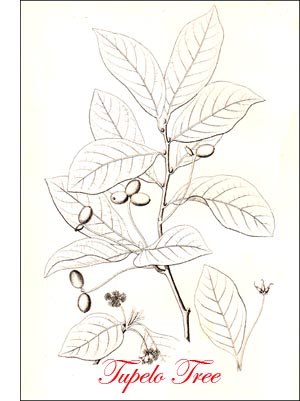 FAMILY CORNACEAE
The cornel family is a large temperate zone group comprising fifteen genera, a few of which are tropical. Comparatively few species are arborescent. Two genera in the United States have species of tree habit. They both include ornamental trees with showy flowers and fruit, and foliage of exceptional beauty. The wood of all is extremely hard and close textured.
THE TUPELOS
Genus NYSSA, Linn.
Trees of picturesque habit, with twiggy, contorted branches; growing in wet soil. Wood cross grained, tough. Leaves alternate, simple, deciduous, leathery. Flowers minute, greenish, in short racemes or heads. Fruit, a fleshy drupe.
THE DOGWOODS
Genus CORNUS, Linn.
Small, slender-twigged trees, with very hard wood. Leaves simple, entire, opposite (except one). Flowers small, in dense cymes; perfect. Fruit a berry-like, 2-celled drupe.
The dogwoods include about thirty species distributed over the Northern Hemisphere, with a single species in Peru. They are chiefly shrubs, a few small trees, and all hardy and ornamental, with handsome foliage, flowers and fruits. An attractive character is the vivid autumn foliage.
From ancient times dogwoods have been planted as ornamentals about homes, and in parks and pleasure grounds; tonic drugs, dyes and inks have been derived from their bark; and the wood has been used for engravers' blocks, tool handles, and in turnery.
The name Cornus (from cornu, a horn) calls attention to the hardness and toughness of the wood. "Dogwood" is one of those unfortunate popular names fastened without reason upon a family of beautiful trees and shrubs. In the good old times it was the practice in England to steep the bark of a certain species and wash mangy dogs with the astringent decoction. Perhaps the dogs were as indignant at this treatment as we are to be persistently reminded of it.
There are eighteen American species in the genus Cornus; one is the little herbaceous bunchberry, scarcely six inches high, but distinctly a near relative of the tree dogwoods, as anyone can see.
Alternate Leaved Dogwood Tree
Cotton Gum Tree
Dogwood Tree
European Dogwood or Cornel Tree
Flowering Dogwood Tree
Ogeechee Lime or Sour Tupelo Tree
Rough Leaved Dogwood Tree
Sour Gum or Black Gum Tree