Broad Leaved Maple or Oregon Maple Tree
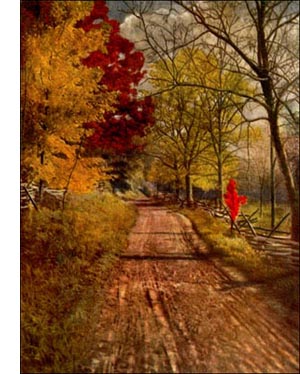 The Broad-leaved Maple, Oregon Maple (Acer macrophyllum, Pursh.)-A large, stout-limbed tree, 100 feet high, with compact head and drooping lower branches. Bark brown, furrowed and with plate-like scales; twigs reddish, with milky juice.
 Wood reddish brown, soft, light, close grained, susceptible of a satiny polish; often having curly and bird's-eye grain. Winter buds: axillary small; terminal larger, red, scaly. Leaves deeply cut, by deep, narrow sinuses, into 5 lobes, each of which has wavy margin, indented into secondary lobes; petioles 10 to 12 inches, slender; blades 8 to t z inches broad and long, dark green, lustrous above; paler beneath; turn orange-yellow in autumn.
Flowers yellow, fragrant, in long racemes in late spring. Fruits paired samaras, ripe in autumn; 1 1/2 inches long, with hairy nutlets, but smooth wings, slightly divergent. Preferred habitat, banks of streams and rich bottom lands. Distribution, south coast of Alaska to San Diego, California. Uses: Valuable ornamental and timber tree. Wood used for furniture and interior finish.
The great leaves that distinguish this species make it a favourite on the Pacific slope. Unfortunately it is not hardy north of Philadelphia, and does better in Europe than in our Eastern States. It really is happiest in the bottom lands of southern Oregon, where it forms forests and attains tremendous proportions. One must see it at home in order to appreciate this maple.
John Muir, writing of the western slopes of the Cascade Mountains, says: "In a few favoured spots the broad-leaved maple grows to a height of a hundred feet in forests by itself, sending out large limbs in magnificent interlacing arches covered with mosses and ferns, thus forming lofty sky gardens, and rendering the underwoods delightfully cool. No finer forest ceiling is to be found than these maple arches."
The wood of the broad-leaved maple ranks highest of all deciduous lumber trees on the west coast. It is equal to the best maple of the Eastern States.