European Hornbeam Tree
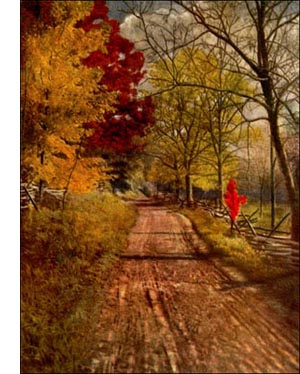 The European Hornbeam (Carpinus Betulus, Linn.) ranges from Scandinavia and England to the Caucasus, and is a beautiful tree of no small note. The "hornbeams" of ancient ox yokes wore indefinitely, becoming as hard and smooth as horn. The trees grow in cold, forbidding situations, where most trees fail, and so serve as windbreaks and as covers of barren clay soil. The wood makes excellent fuel and charcoal, beside its special uses to the turner. In the old days of formal gardens, the hornbeam was popular, for it suffered itself to be clipped with as much patience as the linden, the beech or the yew. It was a famous hedge tree. The Germans made fences by planting rows of the saplings leaning so that each two plants formed a cross. The bark was scraped at the point of intersection, and then the two were bound together with straw, until they grew fast to each other. Careful pruning made of this in a short time a beautiful and impenetrable wall. Miles of this fencing were seen in Evelyn's day. The Germans also planted the trees near the gates of the great cities, training their branches to cover arbours "for convenience of the people to sit and solace in." Travellers in Europe will find the hornbeam still much used as in earlier centuries.
China, Japan and India have native hornbeams; there are nine or ten Species in all. The race is old-the rocks show fossils of extinct species that once inhabited western America.