Pitch Pine Tree
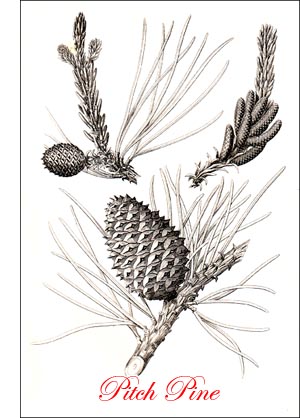 Pitch Pine (P. rigida, Mill.)-A gnarled, irregular tree 50 to 75 feet high, with short trunk and rigid, rough branches. Bark thick, broken into plates by deep, irregular fissures; scales thin; bark red or purple. Wood light red, soft, durable, brittle, coarse. Buds 1/2 to 3/4 inch long, reddish, with fringed scales. Leaves in threes, rigid, stout, 3 to 5 inches long, dark yellowgreen; sheaths becoming black, persistent. Flowers monoecious; staminate short, densely clustered at base of season's shoot; pistillate lateral, in clusters, rosy tinged, oval, short stalked. Fruits biennial, 1 to 3 1/2 inches long, ovate, scales with sharp, recurving beaks. Preferred habitat, sandy uplands and cold swamps. Distribution, New Brunswick to Georgia; west to Ontario and Kentucky. Uses: Fuel and charcoal making. Reforesting worthless land. Sparingly used as lumber.
The pitch pine carries picturesqueness to extremes, and becomes in old age grotesque, even absolutely ugly. It has the look of a tree that has been hounded by untoward circumstances. In youth the tree has a rounded, symmetrical head, formed of successive whorls of branches. In its subsequent struggles symmetry is lost, and the contorted limbs, tufted with scant, sickly-looking foliage, and studded with the squat, black, prickly cones of many years, reach out with an expression of mute appeal that tempts one to cut the tree down and end its sufferings. If it is cut, however, it sends up suckers from the roots, a strange habit among the pines; and its winged seeds spread the species over barren and shifting sand dunes, and otherwise hopelessly treeless areas. This work is so well done on the island of Nantucket and the desert soil of Cape Cod, even those areas which are washed by the spring tides, that the pitch pines have earned the regard of men. The inferior lumber is forgiven.
Pitch pines are rich in resin; the knots especially accummulate it, and " pine knots " and " candlewood " are useful and familiar household words in the regions where this pine grows. Kindling wood and torches for midnight coon hunts are never lacking. The " pitchie kinde of substance " which makes handling of these sticks unpleasant business for tidy folks, gums the saws and makes trouble in the mills. Sills and beams of houses were formerly got of pitch-pine logs, but now other kinds are preferred, and these trees go into charcoal and fuel. The turpentine gatherer, too, has left these trees to seek the richer pineries of the South and West. There is small excuse for the pitch pine to stay on, were it not for the one thing it does better than any other-it makes glad the wilderness and the solitary place.
Pitch Pine Tree picture