Elder Leaved Mountain Ash Tree
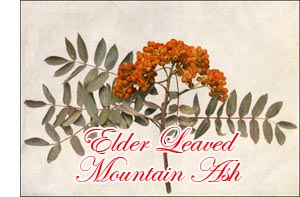 The Elder-leaved Mountain Ash (Sorbus sambucifolia, Roem.) is even more daring in its fight with the elements. It climbs higher on the mountains, and ranges from Labrador to Alaska, following the Rocky Mountains to Colorado. In the East, it goes no farther south than Pennsylvania. The same species inhabits Japan and eastern China.
This species has showier flowers and fruit clusters than S. Americana. In the large area where their ranges overlap, these two can be best distinguished by their leaves. This Western mountain ash has darker green foliage, of abruptly pointed leaflets. The fruits have five large, erect calyx points at the blossom end. These points are small on the berries of the other species, and are bent inward until they lie flat.
All through the summer the graceful, elder-like foliage of the Western mountain ash makes it a tropical-looking tree among its north temperate forest neighbours, though it is rarely more than 15 feet in height. Its open, pyramidal head gives each leaf a chance. After the leaves have fallen, the twigs still hold up their broad discs of scarlet berries that cling until winter is well past.
Elder Leaved Mountain Ash picture