Mountain Ash Tree
 Mountain Ash (Sorbus Americana, Marsh.)-A small tree, attaining 30 feet, with slender spreading branches, forming pyramidal head. Bark smooth, brown or grey, with large lenticels like those on cherry; taste bitter. Wood pare brown, close grained, weak. Buds reddish, pointed, glutinous. Leaves pinnate, 6 to 12 inches long, alternate; petioles red; leaflets 13 to 17, lanceolate, dark yellow-green, pale beneath.
 Flowers creamy white, perfect, small, in broad, compound, flat-topped corymbs, after the leaves in May and June. Fruit small, scarlet, berry-like, with thin flesh and bony seeds. Ripe in September and hang on all winter. Preferred habitat, rich, moist soil. Distribution, Newfoundland to Manitoba; south along mountains to Tennessee and North Carolina. Uses: Planted for its red berries and fern-like foliage. Fruit used in home remedies.
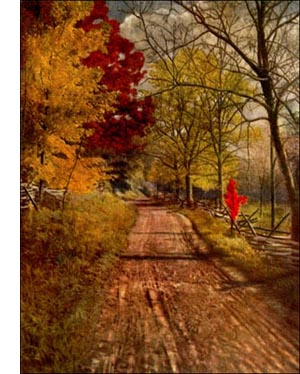
The way to see our American mountain ash at its best is to take a leisurely October drive through the wooded uplands of New England or lower Canada. Along the borders of swamps, or climbing the rocky bluffs, with the wild plums and the straggling beeches, this frail scarlet-berried ash leaps up like a yellow flame, and the broad discs of its fruit gleam among the leaves like red embers in a grate. There is no handsomer leaf at any season than this one, on its red stem, its pointed leaflets dainty and slim as a willow's.
I have wondered that people prefer to plant in their gardens the European species. But I find it is not all the deep-seated craving for imported things. The American tree languishes in warm, dry climates and in the protected situations we are apt to choose. It shows a distinct preference for cold, unsheltered places, exposed to winds, where its growth is stunted. Though its range extends into the Southern States, it always keeps to high altitudes.