Red Bud or Judas Tree
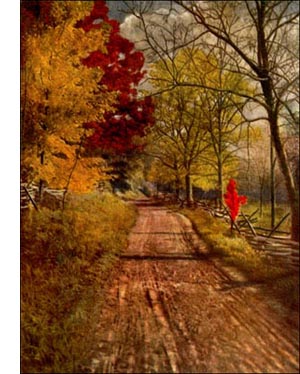 Red Bud, Judas Tree (Cercis Canadensis, Linn.)-A dainty tree, sometimes 40 to 50 feet high, oftener much smaller, with broad, flat head of slender, smooth, thornless, angular branchlets. Bark reddish brown, furrowed deeply and closely, broken into small, scaly plates; twigs brown or grey. Wood heavy, hard, close grained, weak, red-brown. Buds inconspicuous, axillary, scaly, blunt.
 Leaves simple, entire, broadly heart shaped or ovate, alternate, deciduous, on long, slender, smooth petioles which are enlarged at apex; autumn colour yellow. Flowers, April, before the leaves, in axillary fascicles, pea-like, 1/2 inch long, rose pink to purplish; numerous, conspicuous.
Fruit a pod, thin, pointed, flat, smooth, lustrous, purplish, stalked, 2 to 3 inches long, many-seeded. Preferred habitat, borders of streams, under other trees. Distribution, New Jersey to western Florida, Alabama, Mississippi, Texas; Ontario to Nebraska and south. Maximum size, Arkansas to Texas. Uses: Important hardy ornamental tree. Grown in Europe. Flowers sometimes eaten as a salad.
The early-blooming trees and those of small size will ever be held in affectionate regard. Here is one of the most charming of them all-a dainty, low-headed tree skirting the woodlands in the North, often growing farther south in dense thickets, under the taller trees. It wakes with the shad-bush and the wild plum and covers its bare twigs with a profusion of pea-like rosy magenta blossoms in clusters that hug the branch closely, and continue to open until the leaves have unfolded.
The hardiness of the redbud commends it to planters in the Northeast, as well as in the warmer parts of its natural range. It is widely cultivated as a flowering tree. After the flowers, the glossy, round leaves are beautiful, as are also the dainty, pale green pods, which in late summer take on their purple hue The foliage, unmarred by the wear and tear of a season of growth, turns to bright yellow before it falls.
A further merit of the redbud tree is that it begins blooming when very young. It should be in every shrubbery border. Some people prefer the double-flowered form offered by nurserymen. A variety, pubescens, called the downy redbud, grows wild from Georgia westward.