Red Haw Tree
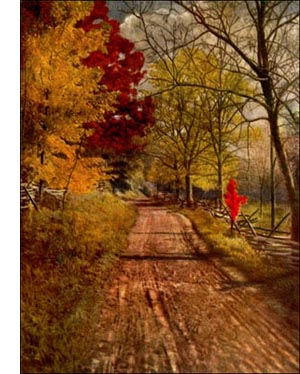 Red Haw (C. coccinioides, Ashe.)-A tree 10 to 25 feet high, with broad dome of stout, spreading branches. Thorns I z to 2 inches long, straight, stout, purplish red. Bark dark brown, scaly; branches light grey. Leaves broadly ovate, acute, sharply serrate, with deep pointed lateral lobes, 2 to 3 inches long, lustrous yellow-green, at first; becoming dull, dark green later; thin, turning to orange and bright red in fall; petioles bright red, 3/4 to 1 inch long.
 Flowers, May, in compact corymbs, with prominent, serrate bracts, with red glands; corolla 1 1/4 inches across; stamens 20, anthers large, rose colour; styles 5. Fruits, October, falling gradually; clusters erect; haws globose, flattened at ends, lustrous, dark red, with pale dots; calyx conspicuous, red at base; flesh thick, reddish, pleasantly acid; nutlets 5, small, slightly ridged on back. Preferred habitat, dry woods. Distribution, St. Louis, Missouri, to eastern Kansas. Uses: Desirable ornamental thorn tree.
The very large leaves of this tree obscure the compact fruit clusters, and its ornamental character is not so obvious until the leaves turn. I recall one tree, a fine, lusty specimen, loaded with fruit in late September. There was a cockspur on one side, an Arnoldiana on the other. Both were bidding high for attention, one with its crimson fruits, the other with its splendid foliage and flashing thorns.
A flush of rose pink covered the middle tree, the fruits turning to red. There was more delicacy of colouring and moderation here, which made the two trees alongside seem rather common and gaudy by contrast. Sometimes soft colours appeal strongly as a relief from more vivid ones. Out of this period the tree passes to its flaming October garb, in the midst of which the shining fruits are a dark crimson, and even the twigs and spines burn red or purple.